News

Save the Basin Submission to the “Let’s Get Welly Moving” Engagement Process

The first phase of the Ngauranga to Airport Governance Group’s Let’s Get Welly Moving process, which is designed to find out what principles people in the Wellington region think should underlie Wellington transport planning, draws to a close at the end of May.

You can see the timeline of the full process here.

You can fill in the survey on the site, or if you want to engage in a deeper way, you can send your thoughts to info@getwellymoving.co.nz. That’s what Save the Basin decided to do – our submission to this first phase of the process is below, and you are welcome to adapt it for your own use. A number of these points build on our September 2015 Op Ed for the Dominion Post.

The next phase will be a call for proposals to rethink Wellington transport. We encourage you to put forward proposals that enhance Wellington role as a city for people, not a city for cars – and that ensure the Basin is not again put at risk.
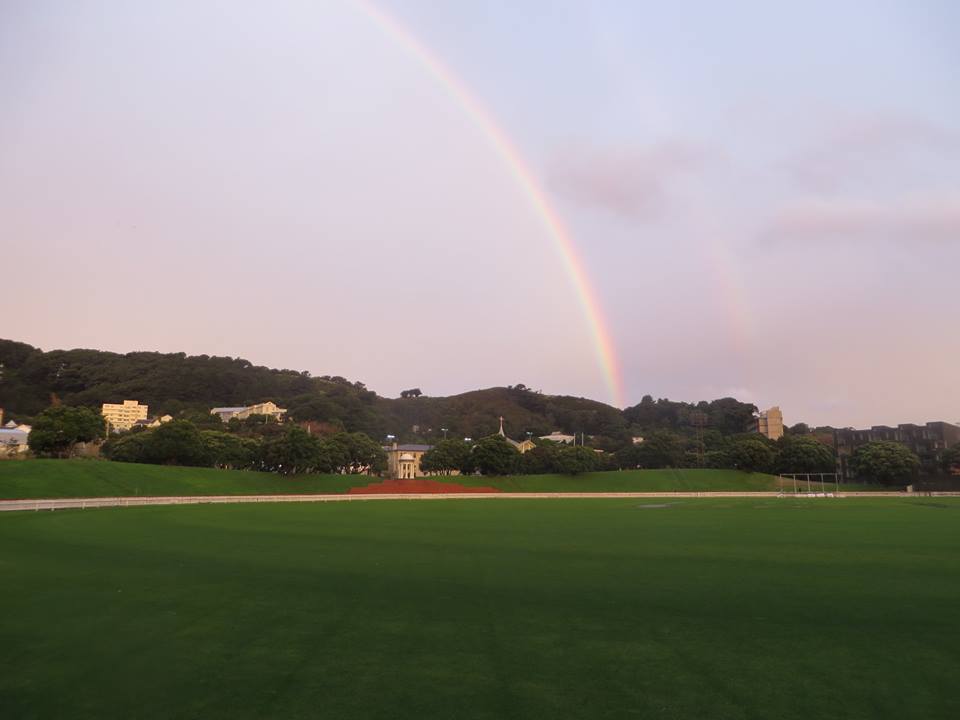
Basin Reserve rainbow. Photo: Patrick Morgan.

Save the Basin Campaign Inc: Submission in response to the “Let’s Get Welly Moving” Engagement Phase

Introduction

As set out in its Constitution, the Save the Basin Campaign Inc has the following purposes:

(a) Promote, preserve and protect the historic character of the Basin Reserve area

(b) Promote high quality urban design and environmental management of the Basin Reserve area

(c) Promote an appropriate role for the Basin Reserve area in the development of a high quality, sustainable transport network, recognising the importance of the Basin to the public transport spine, and the importance of walkability and public transport for the users of the area

(d) Do anything necessary or helpful to the above purposes.

These purposes both explain why our Campaign was completely opposed to the proposed Basin Reserve flyover and took part in two successful rounds of legal action to prevent it gaining resource consent, and why we will oppose any future attempts to build a flyover or other transport infrastructure at the Basin Reserve that threatens the character, landscape, urban design or heritage of the Basin precinct – whether or not such infrastructure is presented as part of a larger package of resource consent applications.

Equally, however, these purposes allow us to participate in discussions about appropriate, sustainable transport developments that involve the Basin Reserve precinct, and thus we are pleased to see the breadth of the engagement process that the Ngauranga to Airport Governance Group has chosen to engage in as the first phase of its Let’s Get Welly Moving process.

Our submission covers three broad areas: the wider transport context, our comments and concerns about the rest of the planned consultation process, and our views on what should be done at the Basin Reserve.

Save the Basin took part in the development of the engagement and transport planning principles for the post-Basin environment submitted under the aegis of Grant Robertson MP, and those principles should also be regarded as part of our input to the engagement process.

The broader transport context

The present engagement process is being carried out at a time of rapid and disruptive change in transport thinking, transport behaviour and urban design – change which means that business-as-usual thinking is no longer appropriate.

These changes include:

  • the Government’s signing of the Paris climate change agreements and its commitment to an associated greenhouse gas emissions reduction target, meaning that serious steps will need to be taken to reduce greenhouse gas emissions from transport
  • increased readiness by both central and local government to fund and provide infrastructure for active modes and public transport
  • the increasing acceptance that building new roads induces further traffic congestion, as amply demonstrated by many local as well as overseas examples
  • the post-2007 breakdown of the previously accepted correlation between population growth and growth in VKT, as notably seen in changes in young people’s transport thinking and behaviour
  • the advent of disruptive technologies such as the wider uptake of car-sharing arrangements; electric vehicles; and driverless cars, with their associated requirement for far less road space
  • a refocusing of urban design, in cities as diverse as Seoul and New York, to put people first rather than cars first.

In our view, a prudent response to these developments by the Governance Group should be to focus on transport behaviour change while also looking to make incremental improvements in transport infrastructure that do not commit the city to major infrastructure developments which may well be rendered redundant by transport behaviour changes, and which would foreclose other, more appropriate responses.

The engagement process: comments and concerns

While we welcome the change in approach represented by the “Let’s Get Welly Moving” (LGWM) process, we still have some concerns about how this is being carried out, and suggestions for improvement:

Methodology and weighting of responses received

The first phase of the LGWM process has been carried out region-wide. However, given the potentially competing interests involved, we submit that there should be a methodology which gives most weight to those most directly affected by potential infrastructure changes along the Ngauranga to Airport Corridor: that is, those who live closest to them.

Calling for proposals

The next stage of the process includes calling for proposals. As such proposals can be both time-consuming and expensive to develop, especially for community groups with limited access to professional resources, we submit that the Governance Group should make available independent advice to assist those who wish to make proposals to do so – similar to the role the “Friend of the Submitter” plays in complex resource consent hearings.

Modelling: assumptions and processes

The modelling tool(s) chosen, and their underlying assumptions, will be of crucial importance in assessing the proposals received and developing scenarios based on them. Therefore, we submit that an “open Government data” approach should be taken to the development and use of these modelling tools. This approach should both

  • allow and encourage the involvement of those in the wider community with expertise in the analysis and use of Government and modelling data to engage with the modelling process and challenge modelling assumptions and processes, with the aim of producing a modelling process that truly reflects the realities of the rapidly changing transport environment, and
  • take account of the range of ways in which the Wellington transport system may develop.

Consultation on scenarios

This is currently scheduled for January to March 2017. However,  our experience is that it is extremely difficult to get people engaged in consultation processes during January and early February due to family commitments over the summer holiday period. Therefore, we submit that this consultation period should not begin until February 2017.

The future of the Basin Reserve: Save the Basin’s position

We believe that the starting point for consideration of the Basin Reserve’s future needs to be the final report of the Basin Bridge Board of Inquiry. We are disappointed that, so far, this does not appear to have been the case. While the immediate response of the applicant was to comb the report for possible grounds for appeal – an approach which proved unavailing in the High Court – the Governance Group should instead pay careful attention to the Board’s findings, which make clear the significance of the Basin Reserve and its environs for Wellington and its residents.

As those findings make clear, a narrow, transport-only focus on the Basin won’t work.   What is needed is a long term vision and plan to protect and enhance an iconic cricket ground, create more open and green space, end urban blight and develop a transport space that accommodates pedestrians, cyclists, public transport users and cars.

The Board identified that the following options were worthy of further consideration:

  • the Basin Reserve Roundabout Enhancement Option (BRREO) – an at-grade option that doesn’t involve bridging or tunnelling;
  • Option X proposed by The Architectural Centre; and
  • a tunnel option suggested but then discarded by NZTA.

Given the rapid and disruptive changes to transport outlined above, we believe that the best option for the Basin is the one which involves the least infrastructure development and provides the most flexibility for future developments. This is the BRREO, or a similar at-grade option. However, the other options foregrounded by the Board should also receive careful consideration.

What should happen next?  Here is our 7-point action plan, some of which is now underway:

  1. Reframe the Basin as a sporting, urban development and heritage area as well as a transport corridor.
  2. Create a master plan for the whole area. Its national significance needs to be given appropriate recognition: instead of seeing the Basin, Pukeahu National War Memorial Park, the Governor General’s residence, numerous local schools and the heritage of Mt Victoria as isolated pieces, the rich history of the whole area should be celebrated.
  3. Go through a robust process to evaluate transport options. Start by carrying out small improvements to bring relief to frustrated transport users, and evaluate these before considering whether a more expensive option is justified. Ensure that, following the Wellington City Council’s “transport pyramid” approach, the needs of walkers, cyclist, and public transport users are given precedence.
  4. Upgrade the Basin and strengthen and preserve the Museum Stand.
  5. Prioritise a Reserve Management Plan for the Basin (as already agreed by the City Council) that will establish key principles on how the ground should be preserved.
  6. Put in place heritage protection for the whole ground in the City Council’s District Plan.
  7. Re-develop Kent and Cambridge Terraces as grand public and private spaces, well connected to the Basin

The Basin Reserve is a place of local, national and (especially in its role as an international cricket ground) international significance. We support options that preserve and enhance its status. We do not support options that put that status at risk.
 

Please Submit On Wellington’s Low Carbon Capital Plan – Deadline Friday – Submission Guide Now Available


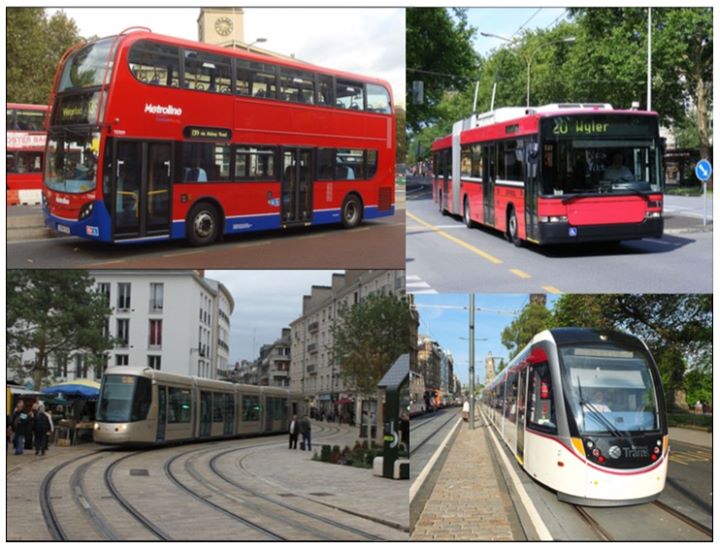
Image from FIT Wellington

Submissions on Wellington City Council’s Low Carbon Capital Plan close on Friday – and now there’s a helpful submission guide you can use, prepared by Wellington climate action group Keep a Cool World.

Why should you submit? Because Wellington City Council has learned how to talk a good game on climate change, while continuing to make decisions that result in increased greenhouse gas emissions that make climate change worse – like supporting further road-building that will lead to increased emissions from induced traffic, or backing an airport runway extension that, if it goes ahead, is projected to lead to a major increase in both truck movements through the central city, and aviation emissions.

Wellington City Council claims to be a leader on climate change action, but for that claim to be credible, its actions have to match its words.

The Keep a Cool World submission guide takes you through some good points you can make, but please adapt it to make the submission your own – cookie cutter submissions are generally less effective!

You can submit as follows:

(If you are submitting by post, you’ll have to be very quick to meet the deadline! There’s a printable submission form at http://wellington.govt.nz/~/media/have-your-say/public-input/files/consultations/2016/03-annual-plan/printable-form.pdf)

Remember, the deadline is this Friday – so please act today!

Fill In The “Let’s Get Welly Moving” Survey

Here’s two useful things you can do for the campaign. One takes about ten minutes, the other could take a little longer. If you don’t have time to do both, please do the first!

1) Fill in the full survey at the “Let’s Get Welly Moving” site set up by the Governance Group: Go to http://www.getwellymoving.co.nz/, scroll down to the “Take the survey” button, and spend ten minutes telling the Governance Group what you do and don’t want to see happen to Wellington City and Wellington transport. What’s more important to you – a liveable city, or faster throughput of cars? This survey lets you state your preferences.

Though the Governance Group is using lots of engagement methods to find out what Wellingtonians, and residents of the region, want for Wellington transport, this survey is the most significant way you can participate at the moment.

Please encourage like-minded friends to fill this survey in as well.

2) Make a submission on Wellington City Council’s “Low Carbon Capital Plan” for the city – a plan which, you might want to suggest, is entirely incompatible with building more motorways or bringing more cars into the central city. You can find all the details on the plan, which as part of the Annual Plan 2016/17, and the consultation process here:

http://wellington.govt.nz/have-your-say/public-inputs/consultations/open/annual-plan-2016-17

and make your submission here:

https://submissions.wellington.govt.nz/submission.aspx

PS: Very soon, Wellington International Airport Limited is expected to submit its resource consent application for an extension to Wellington Airport runway. It was previously indicated that this project, if it goes ahead, would result in massive additional truck movements through the central city during a 3-year construction process – which could have a big effect on both inner city residents and Wellington’s transport systems. Watch out for more news on this in the near future.

NZTA Refuses To Publicly Rule Out A Future Basin Reserve Flyover

At the post-Basin flyover engagement process launch last night, I asked Jim Bentley of Let’s Get Welly Moving (the new brand of the Ngauranga to Airport Governance Group, the joint NZTA/Greater Wellington/WCC body) whether a Basin Reserve flyover was absolutely off the table as an option.

And, although he came up with a carefully-worded answer that they wouldn’t be reintroducing a previously rejected proposal (i.e. the flyover proposal rejected in 2014), he would not say that a flyover as such was off the table. When I asked him to clarify his initial answer, he simply repeated it.

That’s disturbing. And if you’re as disturbed by that news as I am, you’ve got a chance to tell NZTA directly, because they will be participating in the Mt Victoria Transport Forum next Tuesday, 12 April. It would be great if Save the Basin supporters could get along. Details are:

MT VICTORIA TRANSPORT FORUM: The Basin Reserve in the wider city

When: 7.30pm Tuesday 12 April 2016

Where: St Joseph’s Church Hall, Brougham St (see map)

Convened by the Mt Victoria Newsletter

Full details can be downloaded in this flyer.

The forum is to discuss all aspects of the post-Basin engagement process, which looks at wider transport issues across the Wellington region. I think that’s an important conversation to participate in, and it gives us the chance to describe the Wellington we want to live in. You can give your opinion at their new website.

But there are also things we don’t want. Let’s keep making that point loud and clear.

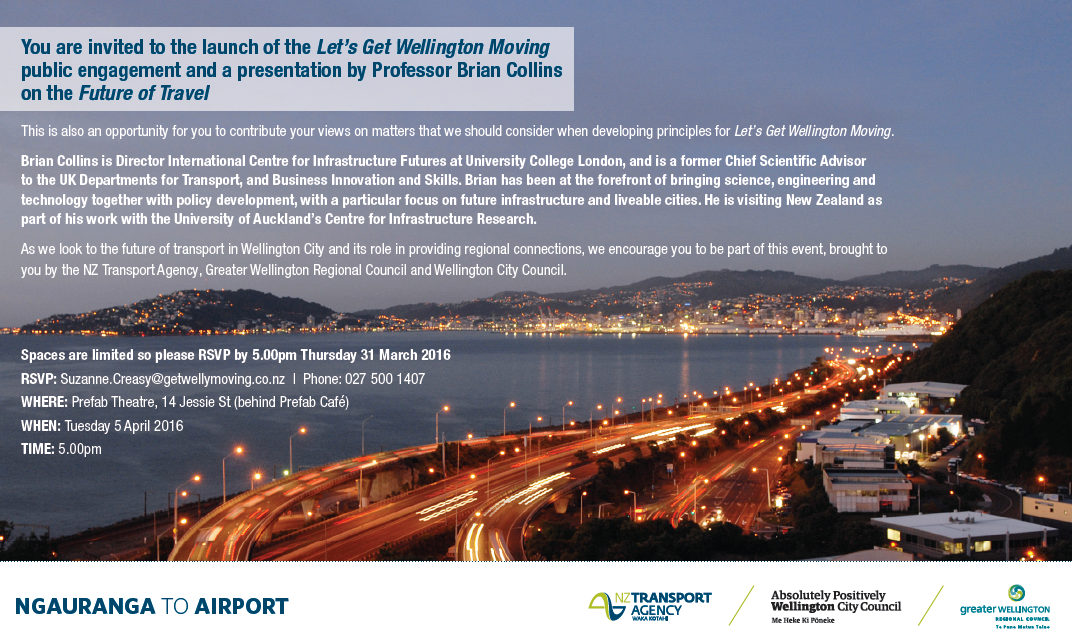
Governance Group Launches Post-Flyover Engagement Strategy on 5 April: RSVP Now

As we signalled, the Ngauranga to Airport Governance Group has now sent out invitations to the launch of its post-Basin Reserve flyover engagement strategy, “Let’s Get Wellington Moving”. This is the Governance Group’s response to the defeat of NZTA’s Basin Reserve flyover proposal: effectively, a reset button for transport developments in the Ngauranga to Airport Corridor.

This time round, the focus is much wider than just the Basin Reserve – it covers the whole Ngauranga to Airport corridor, and it’s about transport behaviour change as well as transport infrastructure. So people who care about the future of the Basin Reserve, and people who want Wellington to transition to a sustainable transport system, should take the chance to get involved at an early stage and shape the principles that will drive the process.

Getting involved starts with having a strong presence at the engagement process launch. Numbers are limited, so I encourage you to RSVP now and make sure your voice can be heard. The invitation is below, and the key details are:

Where: Prefab Theatre, 14 Jessie St
When: Tuesday 5 April, 5pm

RSVP to Suzanne.Creasy@getwellymoving.co.nz by 5pm Thursday 31 March

Click on image to enlarge

engagement_launch

From what we’ve been told, the engagement process will be in three broad phases:

  • April-June 2015: development of principles to guide future planning
  • July-August 2015: seeking ideas and proposals for future transport developments (including proposed changes to transport behaviour as well as proposals for transport infrastructure development)
  • September 2015-Feb 2016: Analysis of proposals, using a new set of modelling tools that will supersede those use by NZTA in developing its Basin Bridge proposal, followed by selection of a small set of options.

The engagement will be region-wide, including with regional mayors, so it’s really important that Wellington voices, and pro-sustainable-transport voices, are strongly heard. Make sure you RSVP, get along, and get your voice heard!

12 April: Mt Victoria Transport Forum

Of course the engagement process launch is only the beginning – and the Mt Victoria Newsletter is hosting an event a week later to discuss these matters further, especially as they affect Mt Victoria. We’ll post more about this next week, but in the meantime, you can download the flyer here.

MT VICTORIA TRANSPORT FORUM:
The Basin Reserve in the wider city
7.30pm Tuesday 12 April 2016
St Joseph’s Church Hall
152 Brougham St, Mt Victoria
Convened by The Mt Victoria Newsletter
For further information Email: MtVictoriaNewsletter@gmail.com


Places, Please: The Next Basin Act Is About To Begin

Summer at the Basin - no flyover in sight
Summer at the Basin – no flyover in sight

It’s been a quiet first few months of 2016, at least in the public eye, as far as post-Basin Reserve flyover transport planning for central Wellington goes. But a burst of articles, presentation and comments in the media signal that this intermission is almost at an end.

Before this post-Christmas intermission, the previous act finished with the drama of the defeat of the New Zealand Transport Agency’s appeal to the High Court, and the news that the Ngauranga to Airport Governance Group, consisting of representatives from Wellington City Council, Greater Wellington and NZTA, had been given official responsibility for determining what should happen next. In December, representatives of Save the Basin and a number of other groups involved in the High Court action met with the Governance Group. Since then, at least in public, the curtain has been down on developments.

But now the players are taking their positions and the next act is about to begin. We understand that a public engagement process designed by the Governance Group, which we hope has taken into account input from Save the Basin and other community groups, will be launched in April. After Andy Foster had a quick say, Ngauranga to Airport programme manager Jim Bentley made a presentation to Wellington City Council earlier this week.

In its article reporting on this, the Dominion Post repeated two common errors: firstly, it assumed that an expensive piece of infrastructure was needed to “fix” congestion at the Basin, and second, it assumed that congestion in central Wellington’s roads stemmed from the Basin itself.

In Wellington Scoop, Lindsay Shelton succinctly debunks both arguments. The Transport Agency themselves have said that incremental at-grade (ground-level) improvements can be made around the Basin – while we believe a wider engagement process is necessary, we support short-term incremental improvements as well.

There are grounds for hope that NZTA may be moving away from the “bigger is better” approach that has bedevilled their transport planning in the past. A focus on making simple, readily affordable changes around the Basin would be a good start – and you can see what other steps we proposed for the Basin in the aftermath of the High Court decision.

Save The Basin’s Meeting With The Ngauranga to Airport Governance Group

Last week, the Ngauranga to Airport Governance Group flew in via private charter flights and met with a number of the groups who had been closely involved in the Basin Reserve flyover hearings – including Save the Basin. We had been pressing for a meeting with the Governance Group, which has been given the responsibility by the Regional Transport Committee for making decisions about post-flyover transport options around the Basin precinct, for some time, and we were pleased that it finally agreed to meet with us and other groups.

Prior to these meetings, Wellington Central MP Grant Robertson called a number of groups together to develop a common approach to the engagement and transport planning processes – a process reflected in this press release from Grant Robertson. Save the Basin was one of the groups that signed on to the letter which Grant Robertson sent the Governance Group.

The meeting itself was brief but constructive. After Save the Basin reiterated our desire for a genuinely consultative and open process to decide on the best transport options around the Basin precinct that also maintained and enhanced the Basin’s significance in terms of heritage, landscape and urban design, the Governance Group assured us that they were committed to the same process, that they found much to agree with in the proposal that Grant Robertson had sent them, and that there was no intention to reintroduce flyover plans by stealth.

So that’s encouraging, but it’s very much early days, and words need to be matched by deeds. Provided the Governance Group’s deeds live up to its words, Save the Basin will be keen to continue to engage with it in 2016.

Grant Robertson: Time for a real say on Basin Reserve transport issues

The New Zealand Labour Party has just put out the following press release, setting out a community-driven proposed process for making decisions about the future of transport around the Basin Reserve precinct following the defeat of the Transport Agency’s flyover proposal. The Save the Basin Campaign has signed up as one of the groups supporting this proposed process.

– Tim Jones, Save the Basin Campaign Co-Convenor

Time for a real say for Wellingtonians on Basin Reserve transport issues

7 December 2015

A number of community organisations have proposed a new, grassroots process to find a solution to the transport access issues around Wellington’s Basin Reserve, Wellington Central Labour MP Grant Robertson says.

“With the flyover proposal thankfully shelved, it is time to create a sustainable solution for transport access around the Basin Reserve. The community who live and move around the area have spent considerable time and resources opposing NZTA’s ideas, and have now come together to work on a positive alternative.

“As the local MP I brought together a number of groups to see if they could find common ground following the High Court decision on the flyover. The result is a set of principles and a draft process for finding the transport solution for the Basin Reserve.

“The core of the proposal is taking an inclusive approach that builds a solution from the ground up. The principles recognise the importance of the Basin Reserve area as a cultural, heritage and recreational space. They also call for improvements to start with ‘at grade’ solutions that balance the need for all modes of transport.

“The plan is to have a draft design process that would be professionally and independently facilitated, including a public ‘design-a-thon’ and proper testing of all proposals.

“The Board of Inquiry and the Court were very clear that NZTA had not properly assessed alternatives to the flyover, nor had they consulted as well as they should have. It’s time to find a new way to reach the best possible outcome for Wellington.

“Along with these community groups I am asking NZTA, the Wellington City Council and the Greater Wellington Regional Council to adopt a process that gives the people of Wellington a real voice in what happens in this important project,” Grant Robertson said.

“Along with these community groups I am asking NZTA, the Wellington City Council and the Greater Wellington Regional Council to adopt a process that gives the people of Wellington a real voice in what happens in this important project,” Grant Robertson said.

The groups who have agreed to the principles and draft process are: Living Streets Aotearoa, Save the Basin Campaign, Mt Cook Mobilised, Mt Victoria Residents Association, Newtown Residents Association and FIT Wellington. Other groups are likely to sign up in coming weeks.

NZTA Hasn’t Yet Learned The Lesson That A Flyover Is A Terrible Idea For The Basin Reserve

In response to the defeat of their Basin Flyover proposal in the Board of Inquiry Hearing, NZTA commissioned a Lessons Learnt Review (PDF) from Synergine Consulting. Now, as a result of an Official Information Act request, that November 2014 review has been released. It makes interesting, but depressing, reading – because it look as though NZTA has learned the wrong lessons from their failure of their flyover proposal.

What makes us say that? This quote on p. 7 sums it up:

In all the interviews the LLR (Lessons Learnt Review) team has carried out and in the LLR workshop there was strong support for the bridge option, Option A.

Option A is the flyover NZTA was so keen on building along the Basin Reserve’s north-western boundary. In its detailed analysis of NZTA’s review, which is well worth reading, Wellington Scoop says:

The report indirectly acknowledges opposition to the flyover, but seems to believe that this could somehow have been overcome if the Transport Agency had done more communicating.


Of course, NZTA’s high-handed, arrogant communication and “consultation” process didn’t help matters – but the real problem is that building a flyover at the Basin Reserve is a really, really bad idea – and no amount of improved communication or better coordination between project partners is going to change that. Some lessons, it seems, will take a while to learn.